
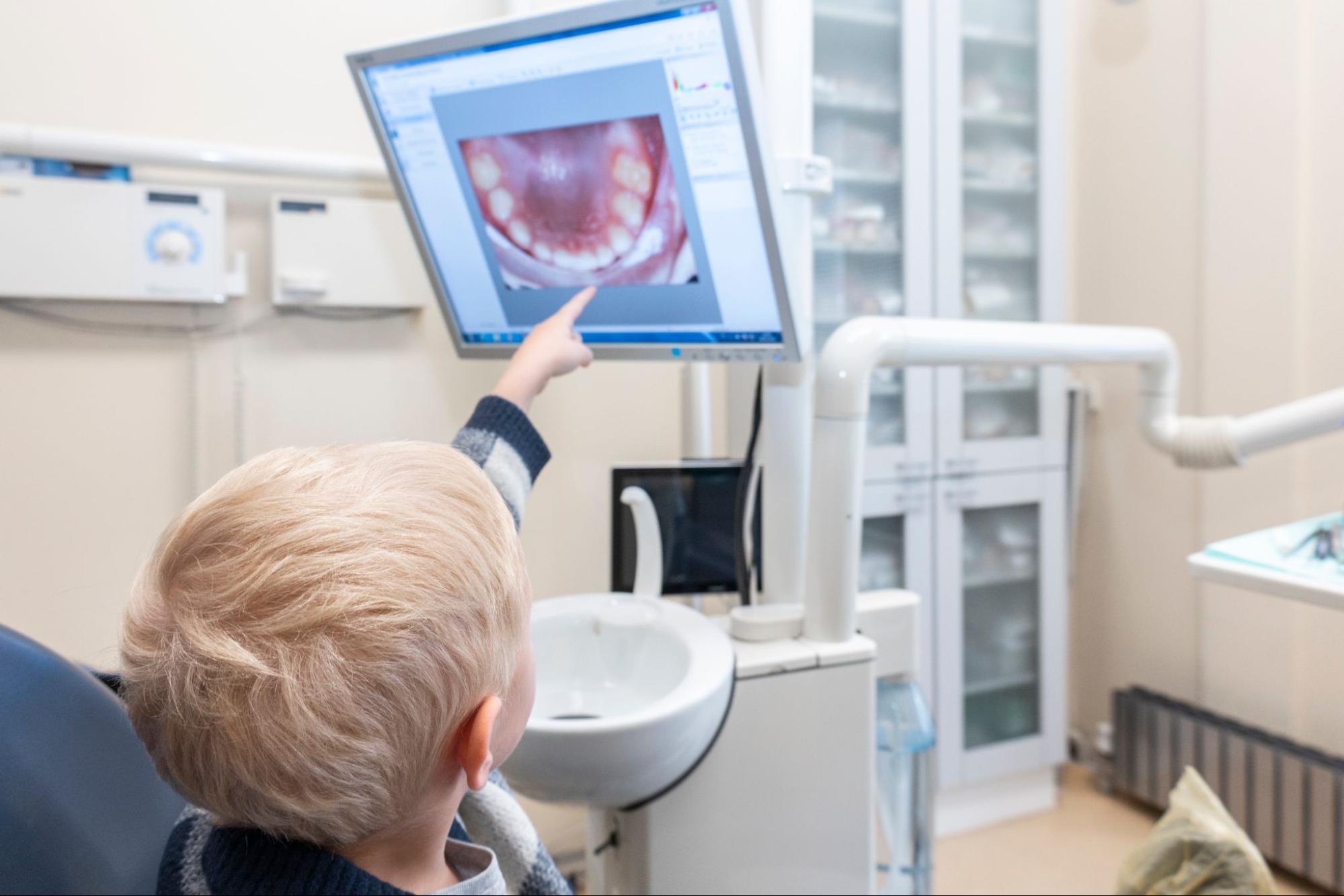
One of my favorite stories from childhood is “The Emperor’s New Clothes.”
The townspeople go along with the crowd, offering their oohs and ahhs about the emperor’s magnificent clothes.
The little boy becomes the hero when he points out the obvious truth.
The emperor isn’t wearing any clothes.
I have seen this same phenomenon play out repeatedly in life.
Dentistry is no exception.
In 1982, I was introduced to the Herbst appliance.
I became an early adopter of this approach to “grow the mandible.”
I jumped on the bandwagon and believed this appliance might eliminate the need for orthognathic surgery.
I was genuinely excited.
I even read an article by an orthodontist in Mesa, Arizona who used the Herbst appliance on an adult.
Adults do not grow, or so I thought.
I tried it myself and saw what appeared to be similar results.
A Class II malocclusion with an overjet became a Class I occlusion.
Like many others, I was caught up in the euphoria of what seemed to be a revolutionary treatment.
But was I truly seeing what I thought I was seeing?
I eventually stepped back and used better tools to critically evaluate what actually happened.
My enthusiasm had blinded me.
Once I measured accurately, the truth became obvious.
The Herbst appliance produced a massive headgear effect that retracted the maxilla.
This was a major negative for tongue space and airway.
It did little, if anything, to move the mandible forward.
My balloon burst quickly.
When I measured airway changes in Herbst cases, I was embarrassed by my own gullibility.
The airway changes were dramatically negative.
More recently, I have also seen unfavorable changes in TMJ health.
Looking back, I feel terrible that I ever used the appliance.
There are many appliances today that claim to grow the mandible.
I now view them as no better than the Herbst.
I will not name them here.
Instead, I challenge you to test every appliance you believe is moving both jaws forward.
My opinion does not matter.
Yours does.
Since the 1960s, one voice in the profession has consistently said that both jaws are recessed in every malocclusion.
Most orthodontists have never heard this idea.
From this individual, I learned an approach that truly develops both the maxilla and mandible forward in growing children.
I was skeptical.
By that point, I had earned a PhD in skepticism.
I needed to measure results myself using tools I trusted.
The early cases stunned me.
I saw forward facial development.
I saw airway improvements accompanying that growth.
I have not seen anything else in the profession that produces comparable results.
To ensure I was not fooling myself, I asked an independent researcher to evaluate a large group of my consecutively treated cases.
I had no involvement in the research or the writing of the articles.
I wanted zero conflict of interest.
Two articles were published.
The first showed a shift from unfavorable vertical facial growth to favorable horizontal forward growth.
Faces with forward growth are more attractive.
This is widely accepted.
The second article showed dramatic airway improvement at all levels.
Better facial balance and a better airway.
That is a powerful combination.
Please do not take my word for any of this.
I have learned my lesson.
I no longer follow the crowd.
I trained my eyes to see differently.
I learned to use better tools.
The ENT physicians who have reviewed this data have been astonished.
You can earn your own PhD in skepticism.
In our Mentorship programs, we give doctors the tools to measure and decide for themselves.
Learning on your own cases can be humbling.
But the lesson matters more when it is your patient.
Or your child.
Are you strong enough to accept that you might be wrong?
Are you willing to change how you practice if your findings confirm what I have learned?
If you are not open to challenging your beliefs, do not proceed.
I have done my best to make my Mentorship participants as skeptical and discriminating as I have become.
Are you skeptical enough to find out for yourself?